.webp)

.webp)
Discover fresh ideas and recent industry insights carefully chosen by our team of professionals.

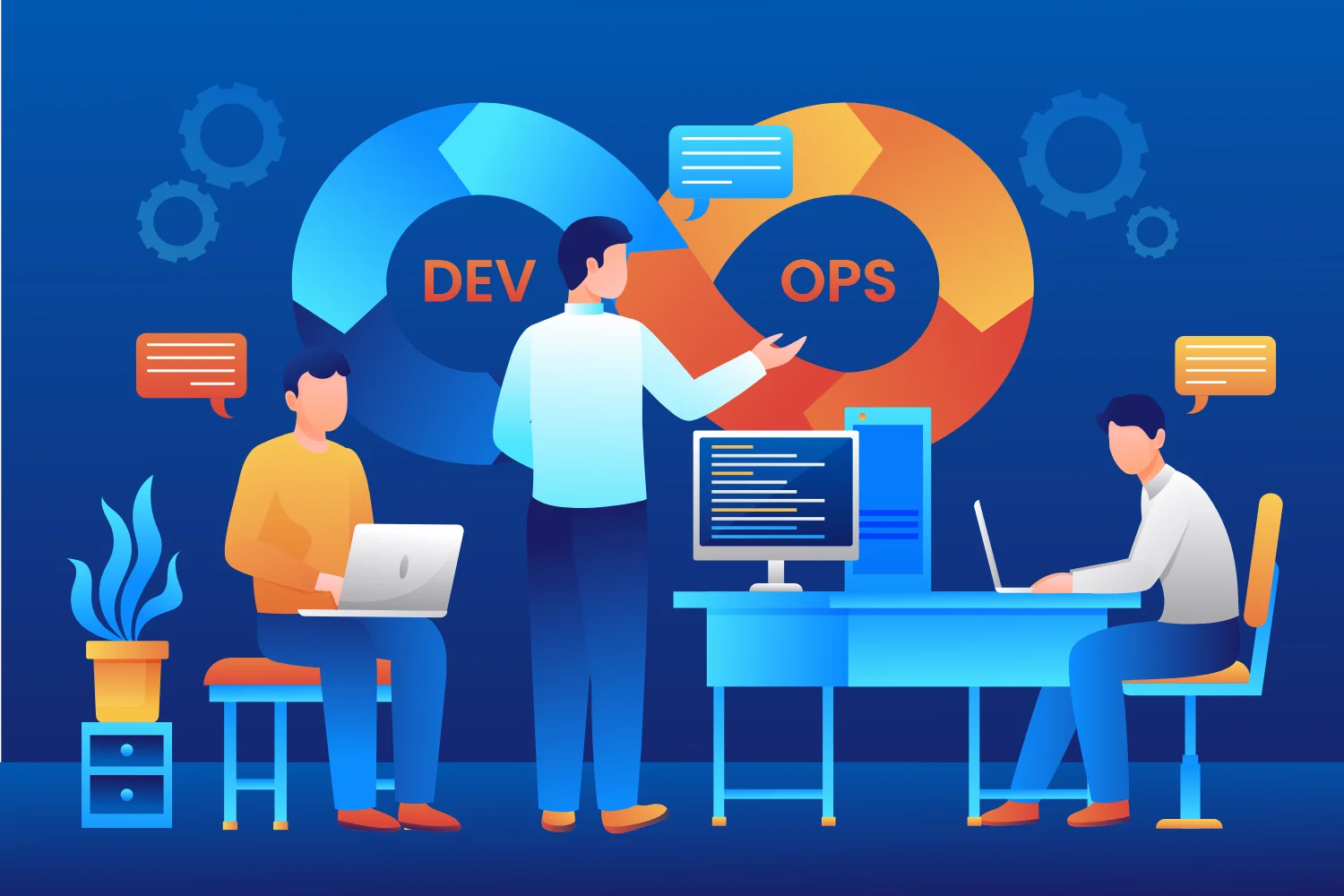
Something is shifting in UK enterprise technology. Quietly but decisively, organisations that once invested heavily in DevOps are now rethinking their approach. The question is no longer whether to adopt DevOps; it is whether DevOps alone is still enough.
The answer, for many, is no.
Across industries, DevOps solution providers in the UK are reporting a clear trend: enterprises are beginning to supplement, or in some cases replace, traditional DevOps models with platform engineering. In 2026, this shift is accelerating.
This blog explores why it is happening, what it means for your organisation, and how to navigate the change.
DevOps revolutionised software delivery. Breaking down silos between development and operations, it enabled faster deployments, stronger collaboration, and greater automation. For a decade, it was the gold standard.
But success brought complexity. As organisations scaled, DevOps began to show its limitations:
The very agility that made DevOps attractive became difficult to maintain at enterprise scale. Something had to give.
Platform engineering is best understood not as a replacement for DevOps, but as its natural evolution. Rather than expecting every developer to manage infrastructure, a dedicated platform team builds and maintains an internal developer platform (IDP): a curated set of tools, workflows, and abstractions that developers can use without needing to understand the underlying complexity.
Think of it as DevOps, productised for your developers.
Platform engineering treats the internal platform as a product in its own right, with real users (developers), a product roadmap, and a focus on experience. Standardisation replaces improvisation. Self-service replaces dependency on specialist teams.
The data confirms what many UK technology leaders are already feeling:
These figures reflect a structural change, not a temporary trend. UK enterprises are not experimenting with platform engineering; they are committing to it.
Understanding platform engineering vs DevOps starts with recognising that they operate at different levels of abstraction:
DevOps is a philosophy. Platform engineering is its infrastructure.
Several forces unique to the UK market are accelerating this transition.
The widespread adoption of Kubernetes and microservices has dramatically increased the infrastructure burden on development teams. Most engineers do not want to manage YAML files and cluster configurations. DevOps solution providers in the UK are seeing growing demand for abstraction layers that shield developers from this complexity.
UK technology businesses are increasingly treating developer productivity as a strategic priority. Poor developer experience leads to slower delivery, higher attrition, and lower quality. Internal developer platforms address this directly, reducing cognitive load, enabling self-service deployments, and standardising "golden paths" for common workflows.
The result is faster onboarding, fewer bottlenecks, and more time spent on work that creates business value.
With UK businesses operating under significant economic pressure, technology leaders are scrutinising infrastructure costs more closely than ever. Platform engineering introduces standardisation that directly reduces waste in tooling, in duplicated effort, and in the specialist time spent firefighting inconsistent configurations.
UK enterprises face a complex regulatory landscape: from GDPR obligations to sector-specific frameworks in finance, healthcare, and public services. Platform engineering bakes security and compliance into the platform layer, making it far easier to enforce standards consistently across all teams and deployments.
DevOps solution providers in the UK report that embedded compliance is one of the most compelling reasons enterprises are making the switch.
Not all internal developer platforms are created equal. The most effective IDPs share several characteristics:
The goal is to make the right way the easy way. When developers can deploy in minutes rather than hours, and with confidence rather than anxiety, velocity follows naturally.
It is worth being clear: platform engineering does not mean abandoning DevOps principles. The cultural foundations (collaboration, automation, continuous improvement, shared ownership) remain essential.
What is changing is the delivery model. DevOps solution providers in the UK are increasingly offering platform engineering as an evolution of their DevOps practices, not a departure from them. The best platform teams are staffed by engineers who deeply understand DevOps and are applying those principles at scale.
For smaller organisations and start-ups, DevOps remains entirely appropriate. Platform engineering makes the most sense when complexity, scale, and developer headcount reach a point where consistency becomes a genuine challenge.
Databuzz is a trusted DevOps solution provider in the UK. We aim at helping ambitious enterprises design and deploy internal developer platforms that scale. Whether you are just beginning your platform engineering journey or looking to optimise an existing IDP, our team of UK-based experts is ready to guide you every step of the way.
Talk to a Databuzz expert today. Free consultation available.
The shift from DevOps to platform engineering is not a rejection of what came before. It is a recognition that, at enterprise scale, the principles of DevOps are best served by a platform that makes them effortless to follow.
UK enterprises in 2026 face a clear imperative: accelerate delivery, reduce costs, improve security, and retain developer talent. DevOps solution providers in the UK that understand platform engineering are uniquely positioned to help organisations meet all four goals simultaneously.
The question is not whether platform engineering will become the enterprise standard. It already is. The question is how quickly your organisation will get there, and whether you will have the right partner alongside you when you do.
Q1. What is the main difference between DevOps and platform engineering?
DevOps is a cultural philosophy focused on collaboration and automation. Platform engineering builds on it by creating a dedicated internal platform that standardises tooling and self-service capabilities for developers at scale.
Q2. What is an internal developer platform (IDP)?
An IDP is a curated set of tools, workflows, and infrastructure abstractions that allow developers to deploy and manage applications independently, without specialist infrastructure knowledge or dependency on operations teams.
Q3. How do I choose the right DevOps solution providers in the UK for platform engineering?
Look for providers with demonstrable experience building internal developer platforms, a UK-based team, strong cloud and DevSecOps credentials, and a track record of delivery with enterprise clients across regulated industries.
Discover fresh ideas and recent industry insights carefully chosen by our team of professionals.





Connect with a DataBuzz expert to explore how our tailored solutions can drive your success.


